Training for the people who keep behavioral health units safe
Self-paced online courses for behavioral health techs and the staff who work beside them. Built on real inpatient practice, written to stay inside a tech’s scope, and clinically reviewed by a licensed counselor.
For hospital educators and unit leaders: see department packs
Latrina Ray Raddler, M.Ed., LPC-S

The staff patients see most
Techs spend more time with patients than anyone else on the unit. These courses give them the words, the habits and the limits that keep everyone safe, from the first shift on.
Built for the unit, not the classroom
Inpatient-specific
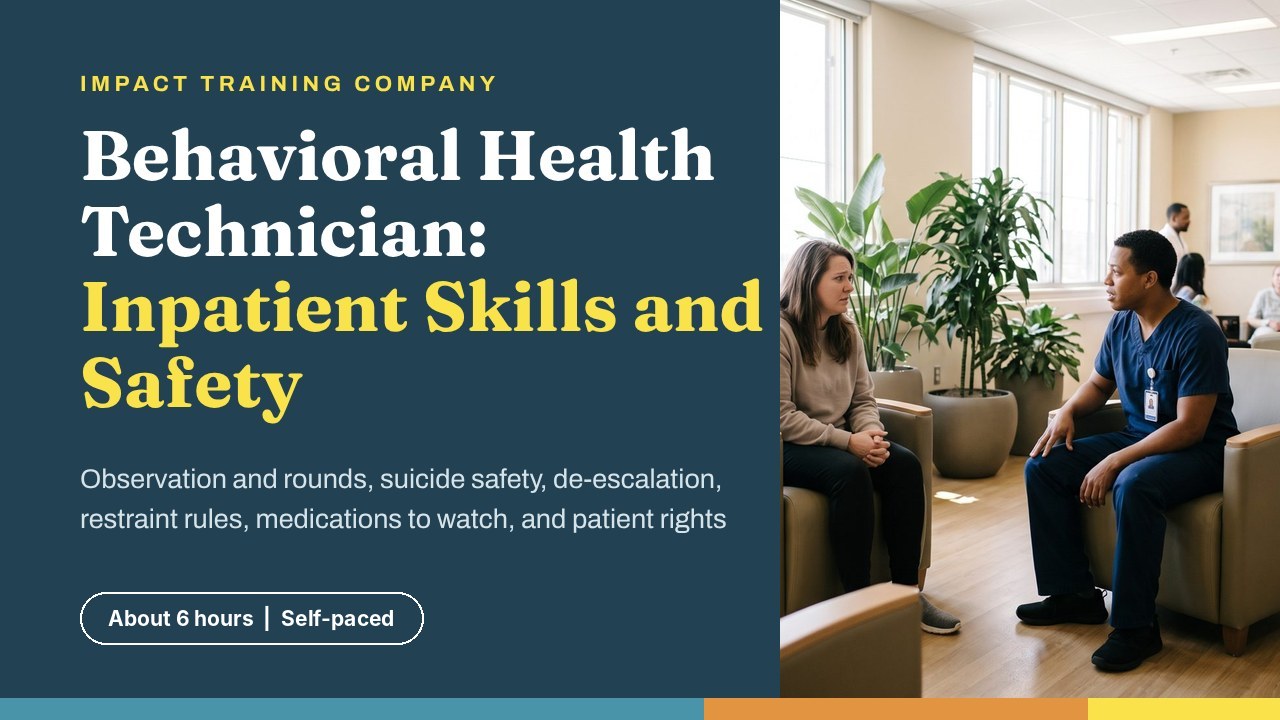
Observation and rounds, suicide safety, de-escalation, restraint rules, medications to watch, the safe milieu and patient rights. The skills a tech uses every shift.
Scope-safe by design
Techs observe, act within their role and report. Restraint content is knowledge only. No lesson teaches a tech to assess, diagnose or handle medication.
Clinically reviewed
Clinical content is reviewed by a licensed professional counselor and supervisor with more than 20 years in addiction, mental health and family systems. Medication lessons are limited to what techs observe and report.
Do. Report. Tell.
Every topic ends with the same three questions a tech asks on every shift. Here is how the course answers them when a patient says she plans to hurt herself tonight.
Learn it the way it happens on the unit
Short captioned animations turn the hardest moments into something you can see, pause and replay on your phone.
Ten lessons, one practice shift, one final
- 00Welcome and how the course works
- 01The role, the care team and scope
- 02Mental health conditions: what you see and what to report
- 03Therapeutic communication, boundaries and trauma-informed care
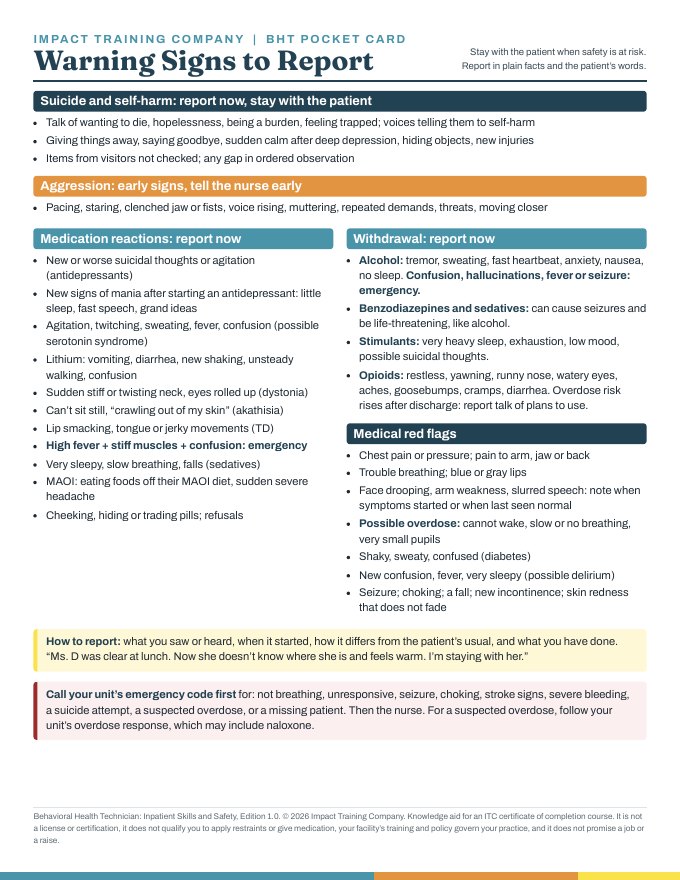
- 04Suicide and self-harm safety
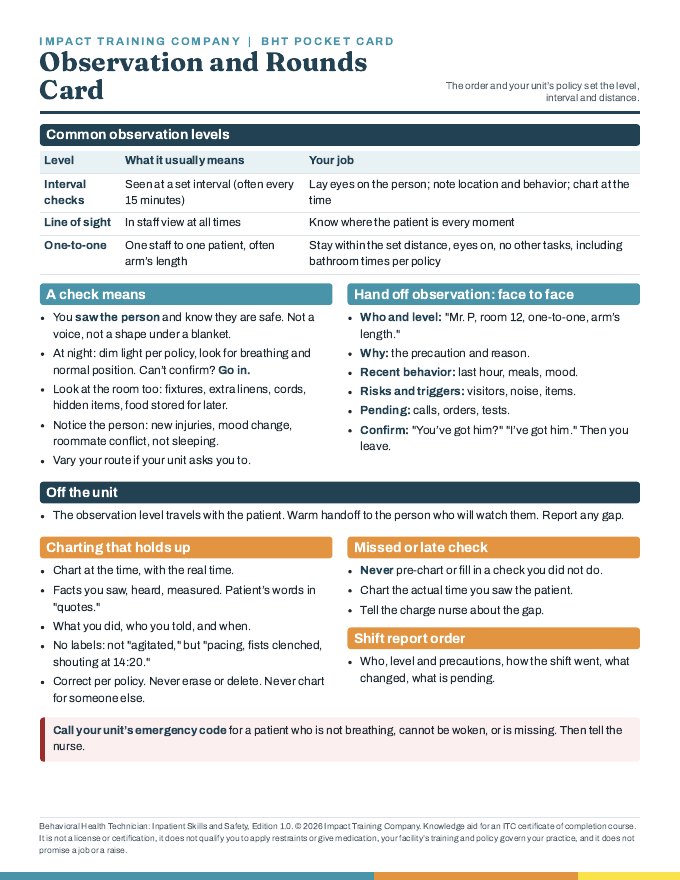
- 05Rounds, observation levels and documentation
- 06Preventing aggression and verbal de-escalation
- 07Restraint and seclusion: rules, rights and monitoring
- 08Medications: what techs observe and report
- 09The safe milieu and daily care
- 10Patient rights, law and ethics
- LABPractice lab: one evening shift
- EXAMFinal exam: 30 questions, 80 percent to pass
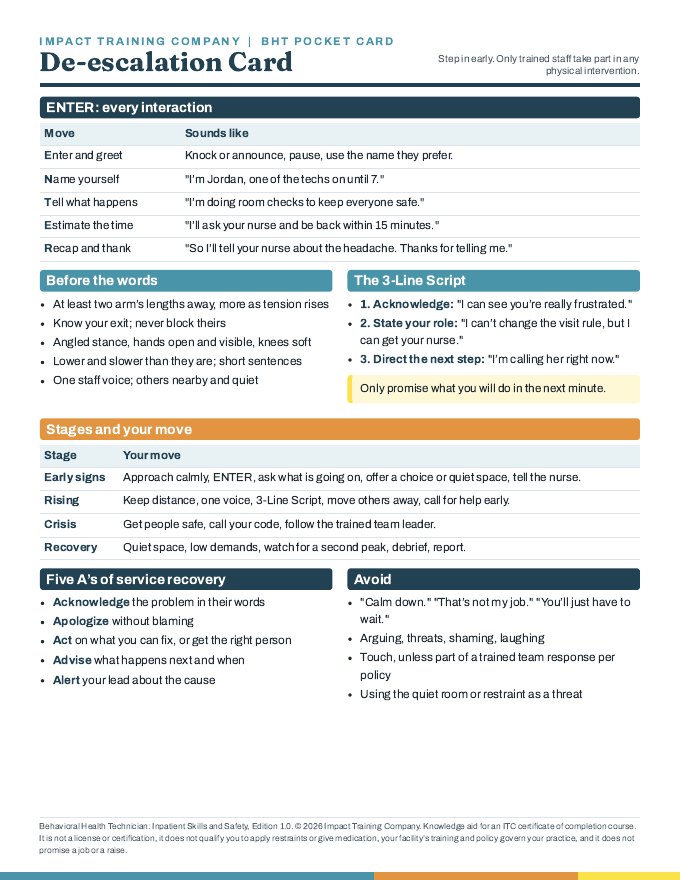
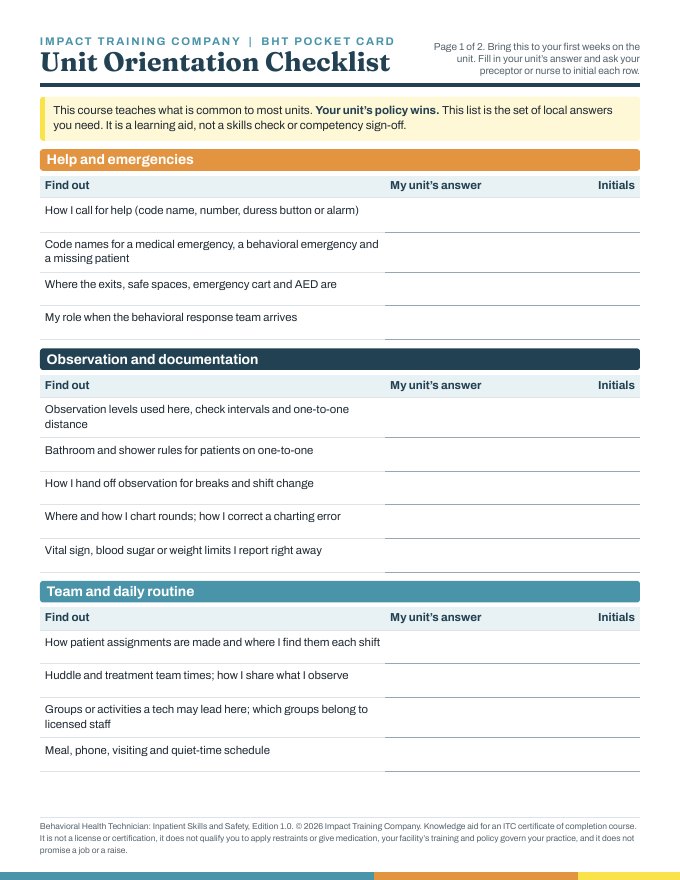
Four job aids, ready to print
Pocket cards for the moments that matter, and a checklist new hires fill in with a preceptor on their own unit.
From enrollment to certificate
- 1EnrollBuy the course or a department pack. Access starts right away and does not expire.
- 2Learn at your paceLessons, animations and scenarios on any device, about 30 minutes each.
- 3Practice a full shiftTen scenarios from one evening on the unit, with strong responses explained.
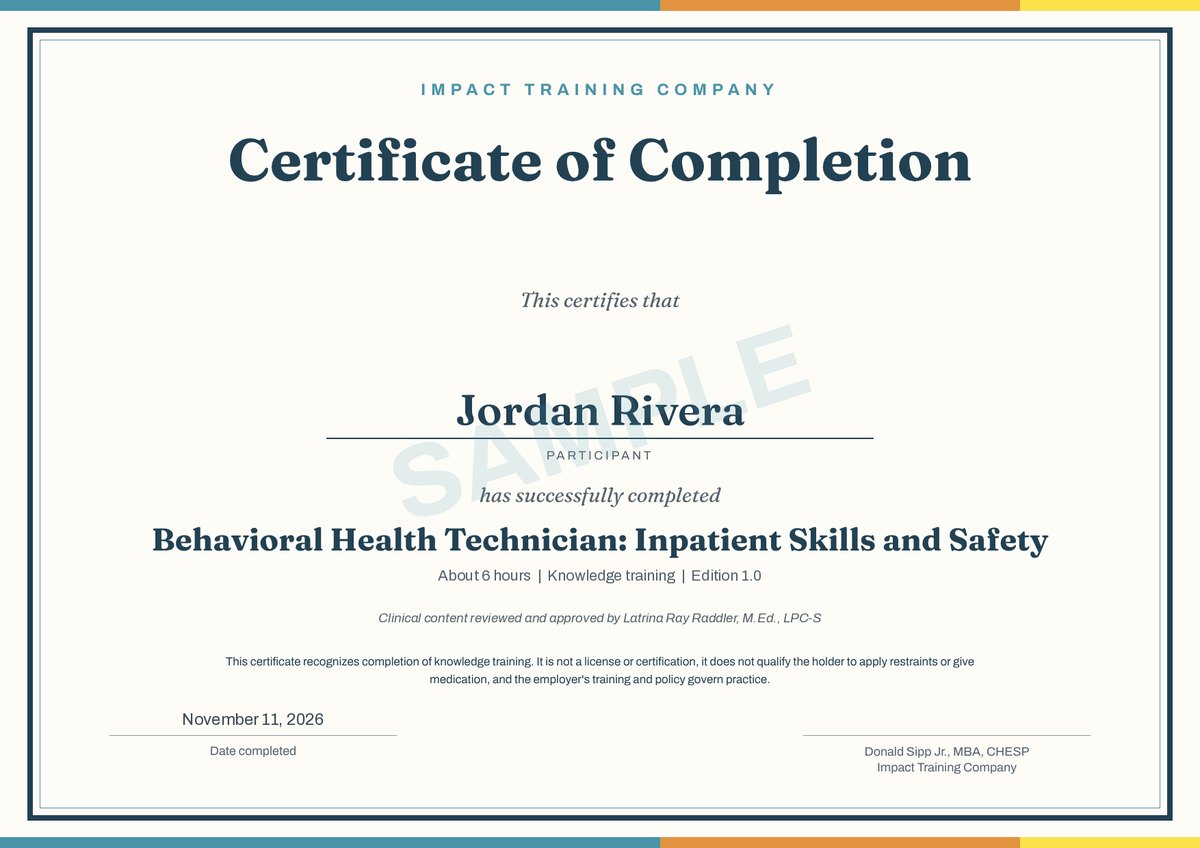
- 4Earn your certificatePass the final at 80 percent and download your certificate of completion.
Training a whole unit?
Buy a department pack, send us your roster, and we enroll your team. Need to swap someone out later? Send the name to remove and the name to add.
Need more than 25 seats? Talk to us.Built by people who know hospital support teams
Impact Training Company builds credentials and training for hospital support services teams, including the Certified Healthcare Transporter (CHT) credential. Every course is written for the frontline staff who keep patients safe and moving.
Latrina Ray Raddler
Latrina is a licensed professional counselor and supervisor in Louisiana and a licensed professional counselor in Washington, with more than 20 years of experience in clinical practice, research, teaching and clinical supervision. Her work spans addiction, mental health and family systems, with a strong focus on culturally responsive, trauma-informed care.
She directs an addiction studies and mental health certificate program, teaches as a university adjunct, and develops curriculum for counseling and healthcare programs. At Impact Training Company, she reviews the clinical content in Behavioral Health Branch courses, and she served as expert consultant on Choices for Psychological Safety.
“Her aim: to equip future professionals with the tools and compassion they need to make a meaningful impact in the lives of others.”
More courses for behavioral health teams
Before you enroll
Is this a license or certification?
No. The course earns an ITC certificate of completion. It is not a license or certification and does not prepare you for any licensing exam.
Will it qualify me to use restraints or give medication?
No. Restraint and seclusion content is knowledge only: the rules, rights and monitoring. Hands-on restraint, crisis intervention and BLS training come from your employer or an authorized provider.
How long does it take?
About 6 hours, self-paced. Most lessons take about 30 minutes, and you can stop and pick up where you left off.
How long do I have access?
Your access does not expire, so you can finish at your own pace and come back to review before your next shift.
Is there an exam fee or certification voucher?
No. There is no exam fee and no voucher upsell. The course teaches what techs need on the unit, and your employer’s training and policy are what qualify you for the role.
Does it carry continuing education credit?
Not at this time.
How do department packs work?
Buy the pack, reply to the order email with your team’s names and work emails, and we enroll them. Seats can be reassigned.
Who reviews the clinical content?
Latrina Ray Raddler, M.Ed., LPC-S, the branch’s clinical advisor and instructor, reviews the clinical content. Medication lessons are limited to what techs observe and report.
What if the course is not the right fit?
You can request a refund within 30 days of purchase under our refund policy.
Courses in the Behavioral Health Branch earn an ITC certificate of completion. They are not a license or certification, they do not qualify you to apply restraints or give medication, your facility’s training and policy govern your practice, and they do not promise a job or a raise.
These courses are education, not counseling or crisis care. If you or someone you know is in crisis, call or text 988.