
About Course
About this course
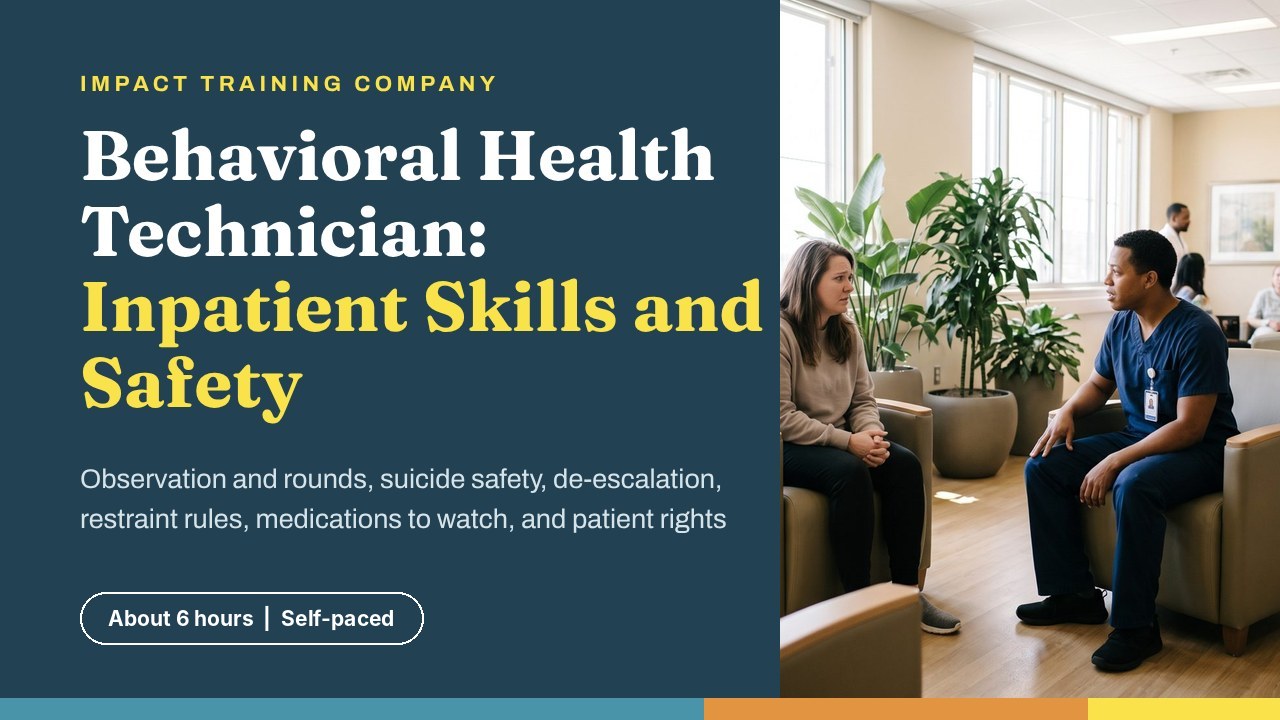
Behavioral health technicians spend more time with patients than anyone else on the unit. This course teaches the inpatient skills that keep patients safe and supported: watching against each patient’s baseline, talking in a calm and trauma-informed way, doing rounds and one-to-one observation without gaps, spotting suicide and aggression warning signs early, recognizing medication reactions and medical emergencies that look psychiatric, and protecting patient rights and privacy. Every topic ends with the same three questions you will ask on every shift: what do I do, what do I report, and who do I tell?
Clinical review: Clinical content reviewed and approved by Latrina Ray Raddler, M.Ed., LPC-S, Clinical Advisor, Behavioral Health Branch, Impact Training Company.
It is built for behavioral health techs, mental health techs and psych unit staff on inpatient units, in psychiatric emergency areas and on medical floors, and for new hires and job seekers headed for those roles.
How it works
- 10 lessons, each with a unit scenario, check-yourself questions and an activity
- 10 topic quizzes (80 percent to pass; retake as often as you need)
- A practice lab: one evening shift on the unit, ten scenarios
- A final exam: 30 questions from a 41-question bank, 80 percent, 3 attempts
- Three downloadable pocket cards (Observation and Rounds, Warning Signs to Report, and De-escalation with ENTER) and a Unit Orientation Checklist to take to your unit
- About 6 hours, self-paced, with a certificate of completion
What this course is, and is not
This course earns an ITC certificate of completion. It is not a license or certification, it does not qualify you to apply restraints or give medication, your facility’s training and policy govern your practice, and it does not promise a job or a raise.
The course title is Behavioral Health Technician. In some states another, similar title is separately licensed; this course does not lead to any license or prepare you for any exam. Restraint and seclusion content is knowledge only: the rules, rights and monitoring.
Pairs well with
- Patient Safety Attendant: Entry Training: one-to-one sitting and observation in more depth
- The 60-Second Encounter: Patient Experience Communication for Behavioral Health Teams: patient experience and communication on the unit
- Hallway and Elevator De-Escalation: Verbal Safety for Support Services: verbal safety in hallways and elevators
- Choices for Healing Trauma: recovery after hard events
- Medical Terminology for Hospital Support Staff: the terms and abbreviations used on the unit
Department packs for hospitals (10 or 25 seats) are coming soon.
Course Content
Start Here
Welcome and How This Course Works
Part 1: The Role and the Person
Part 2: Safety
Part 3: Daily Care and Rights
Part 4: Practice and Final
Student Ratings & Reviews
