About Course
About this course
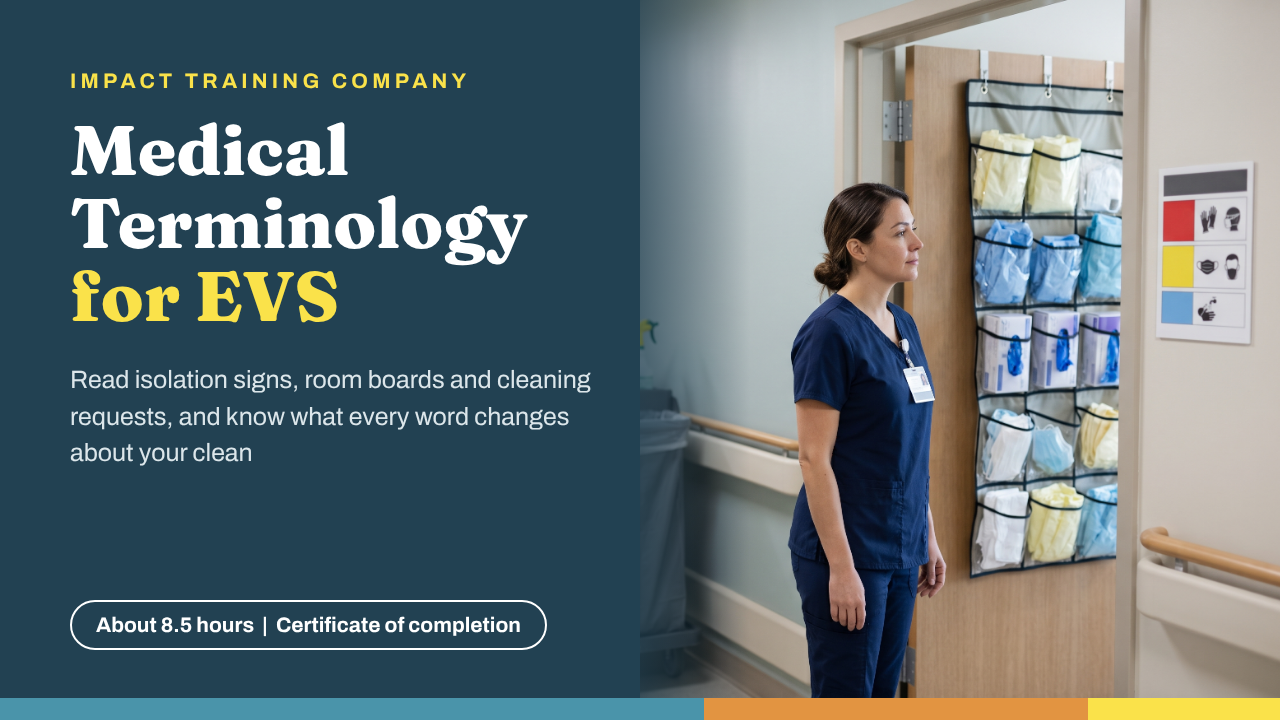
An EVS technician reads more medical shorthand in a shift than most people expect: isolation signs, room boards, discharge clean requests, wristbands, product labels and work orders. Those words decide what you wear, which product you use, when you may enter a room and what you must never touch. This course teaches you to read them, using the documents you see every day.
What makes it different
- Built for EVS, not nursing: every scenario, example and activity is an EVS shift moment
- A read-it-backward method for breaking down words you have never seen
- Isolation signs, wristbands and germ shorthand, tied to what you wear, which product you use and when you may enter
- A full decode of a discharge clean request and a patient room whiteboard
- Read-back and safe wording that prevent wrong-room cleans and missed precautions
- 9 practice quizzes, a graded capstone shift and a 40-question final exam
Your role, and your facility comes first
This course teaches you to read and recognize medical words. It does not teach you to diagnose, treat or make clinical decisions. Hospitals use different signs, products and abbreviations. Where anything differs from your hospital’s policy, signs or product labels, follow your hospital and ask your lead.
This course is professional development. It does not carry continuing education (CE) credit. It earns an ITC certificate of completion, which shows knowledge of medical terms used in hospital environmental services, not hands-on skill or site authorization.
Medical Terminology for Non Clinical Staff in EVS
This is medical terminology for non clinical staff who clean patient rooms: EVS technicians, floor techs, discharge cleaners and the leads who train them. You do not need a nursing background. The course starts from the signs, boards and requests you already see on a shift and teaches you to read them well enough to stay safe and clean the right room the right way.
What you will be able to do
- Break down a medical word you have never seen by reading it backward, from the ending to the root to the beginning.
- Recognize common terms for the heart and lungs, bones and nerves, and the digestive, urinary, skin and blood systems.
- Use position and direction words to follow a cleaning order.
- Read isolation signs, wristbands and germ shorthand, and connect them to what you wear, which product you use and when you may enter.
- Know which units and rooms change how you clean.
- Decode a discharge clean request and a patient room whiteboard.
- Use read-back and safe wording to prevent wrong-room cleans and missed precautions.
How the course is built
The course runs as nine short lessons, each with a practice quiz. Every scenario and activity is set in an EVS shift, not a nursing station. After the lessons, a graded capstone walks you through a full shift of signs and requests, and a 40-question final exam closes the course and earns an ITC certificate of completion. This medical terminology for non clinical staff teaches you to read and recognize terms. It does not teach diagnosis or clinical decisions, and your hospital's signs, products and policy always come first.
For other courses on cleaning, discharge workflow and EVS leadership, see the environmental services training page, where this medical terminology for non clinical staff course fits early in the EVS track.
Course Content
Start Here
Welcome and How This Course Works
How Medical Words Work
Body System Words
Position, Signs and Units
Requests, Boards and Safe Wording
Practice and Assessments
Student Ratings & Reviews