
About Course
Part of When Beds Don’t Move: The Course, six Flow Physics modules of patient flow training for hospital leaders.
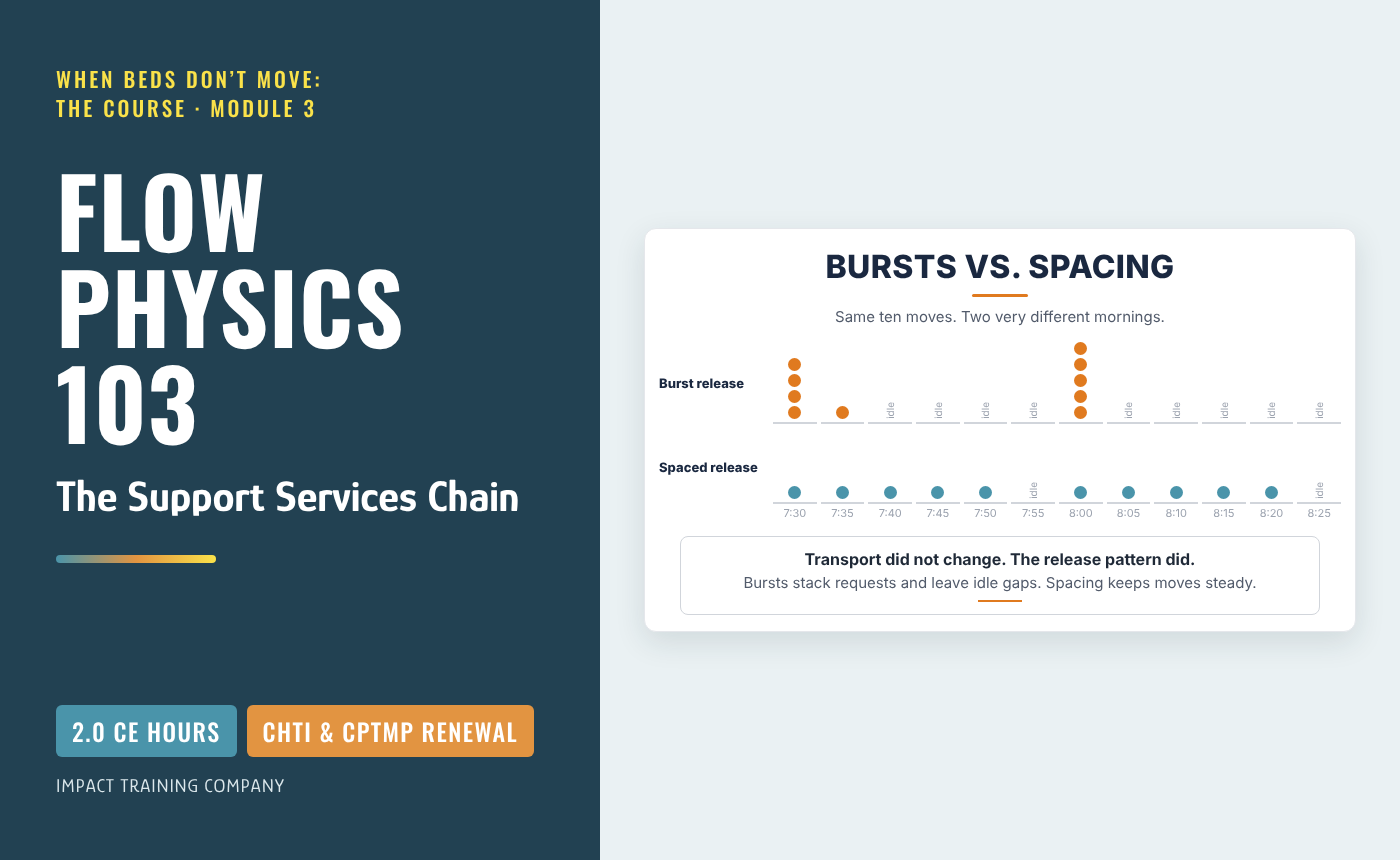
Module 3 of When Beds Don't Move: The Course. Learn how EVS, Transport, and Placement work as one chain: why rooms start the day, why Transport needs spacing more than speed, why adding transporters rarely holds, and how to place admissions by unit bandwidth instead of filling the first open bed. 2.0 CE hours. Counts toward CHTI and CPTMP renewal.
This module is built from Donald Sipp's book When Beds Don't Move, which reached #1 in Hospital Administration and Care on Amazon. The book is not required to take the course.
Course Content
The Support Services Chain
Rooms Start the Day
How EVS Drift Starts
Leading EVS Early, and the Night Before
Transport Carries Rhythm
Why Adding Transporters Doesn't Hold
Transport as the System's Gauge
Placement Decides Where Pressure Lands
Practice Lab: Sequence by Bandwidth
Flow Physics 103 Knowledge Check
Student Ratings & Reviews

No Review Yet