
About Course
Part of When Beds Don’t Move: The Course, six Flow Physics modules of patient flow training for hospital leaders.
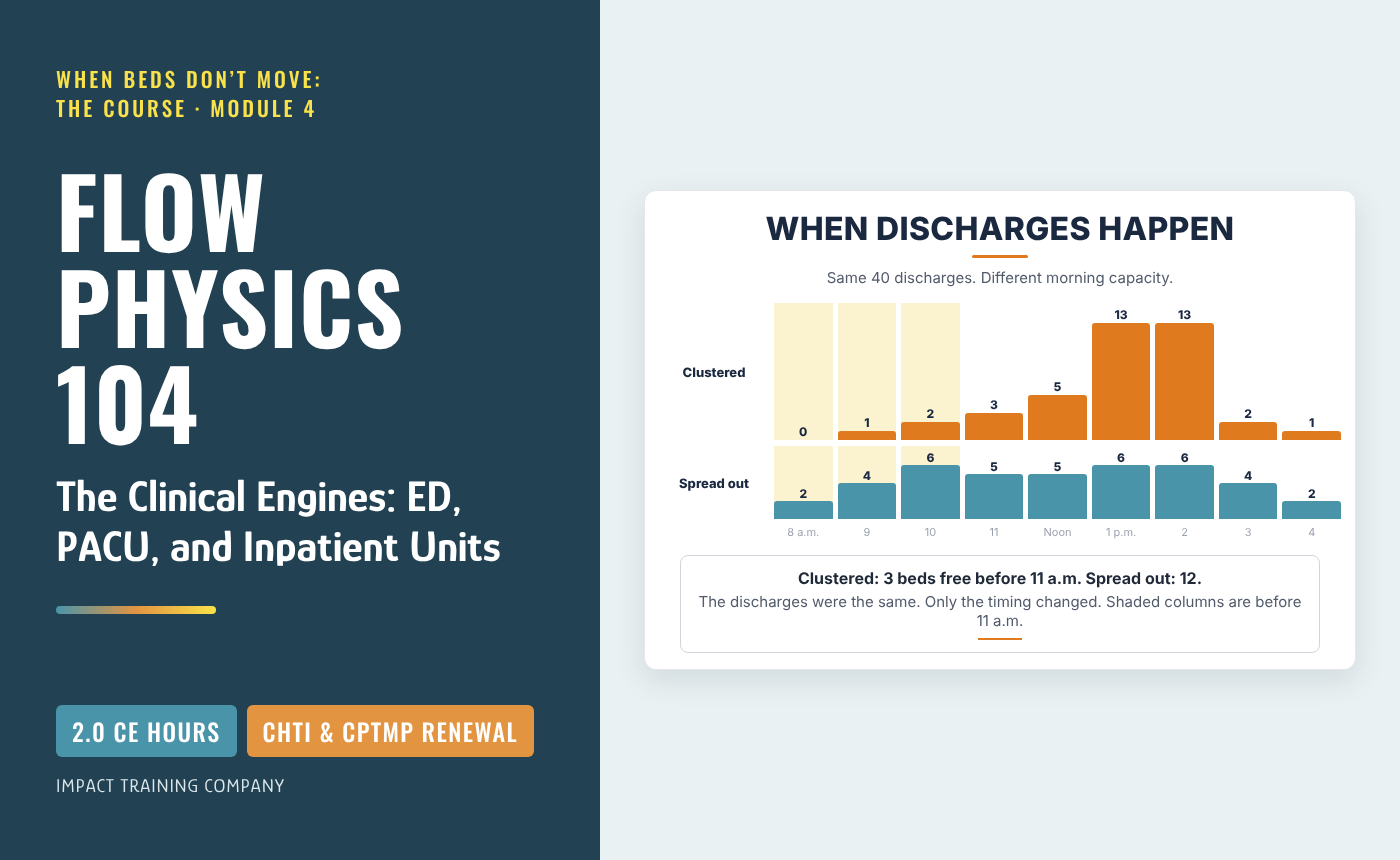
Module 4 of When Beds Don't Move: The Course. Learn how the three clinical engines, the ED, PACU, and the inpatient units, show whether the rest of the hospital did its job: why the ED reports a surge instead of causing it, why PACU holds are a release problem, why units run out of bandwidth before they run out of beds, and how discharge timing frees morning capacity without adding staff. 2.0 CE hours. Counts toward CHTI and CPTMP renewal.
This module is built from Donald Sipp's book When Beds Don't Move, which reached #1 in Hospital Administration and Care on Amazon. The book is not required to take the course.
Course Content
Flow Physics 104: The Clinical Engines
The ED Reports; It Does Not Cause
Outflow, Not Inflow
Why the ED Cannot Fix Itself
PACU Is a Release Engine
Waves, Not Patients
Inpatient Units Are Bandwidth
The Discharge Timing Architecture
Practice Lab: Clear the Exits
Flow Physics 104 Knowledge Check
Student Ratings & Reviews

No Review Yet